Restaurant CRM Guide: How to Build Real Customer Loyalty (2026)
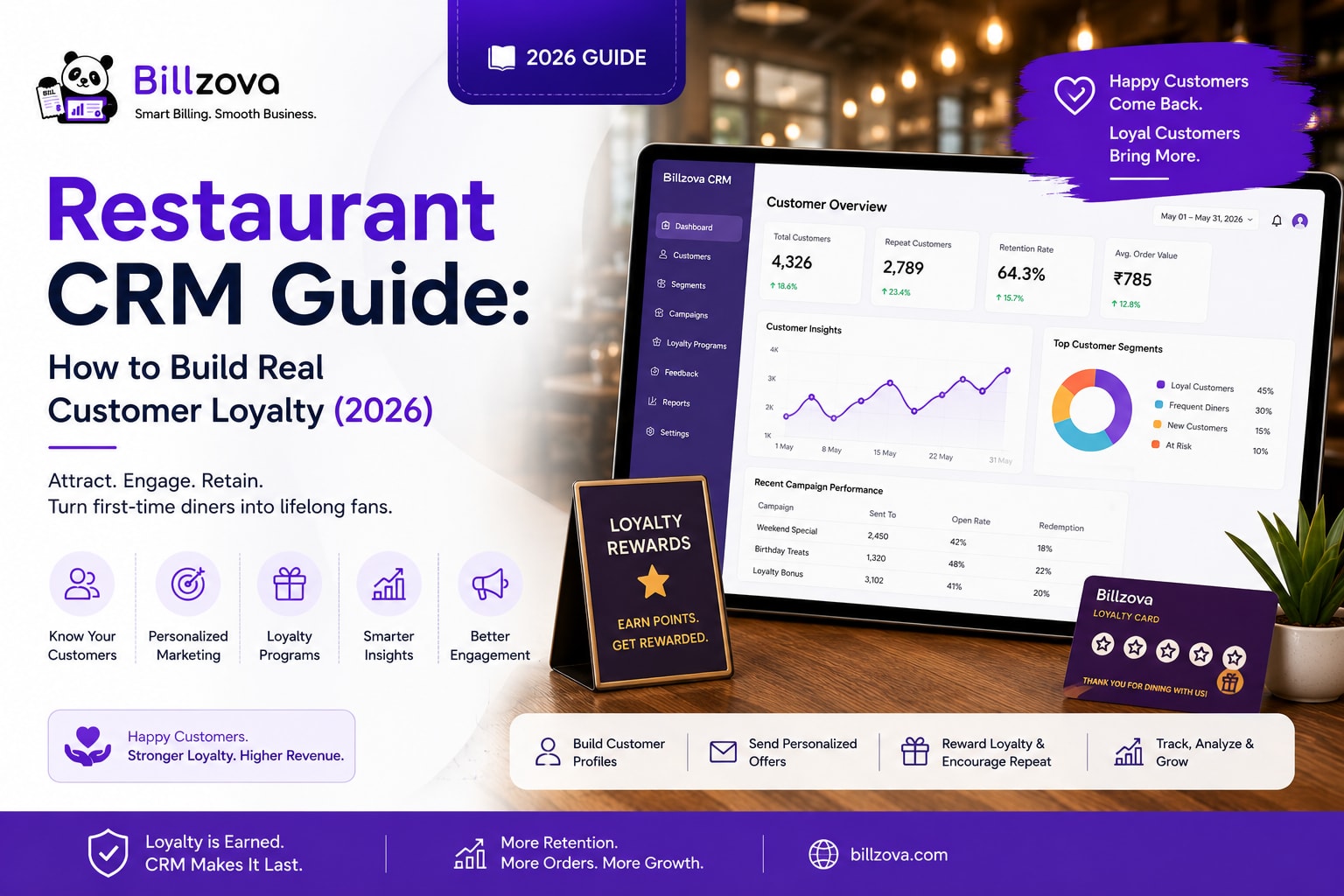
Restaurant CRM Guide: How to Build Real Customer Loyalty
Most restaurant owners intuitively understand that repeat customers matter more than first-time visitors — yet very few can actually answer basic questions about their own regulars: how often does a typical loyal customer visit, what do they tend to order, and what would meaningfully bring them back more often. A restaurant CRM strategy exists to answer exactly these questions, but most restaurants either skip it entirely or implement it in a way that adds friction without adding real insight.
This guide covers what restaurant CRM actually means in practice, how to build a loyalty strategy grounded in real data rather than guesswork, which customer metrics are actually worth tracking, and the specific mistakes that cause most restaurant loyalty efforts to underperform or quietly fail.
Table of Contents
- What Restaurant CRM Actually Means
- Why Repeat Customers Matter More Than You Think
- The Customer Data That Actually Matters
- Building a Loyalty Strategy Step by Step
- Manual CRM vs Automatic CRM Tracking
- Customer Segmentation for Restaurants
- CRM Priorities by Restaurant Type
- Common Mistakes That Sink Loyalty Programs
- Best Practices for Restaurant CRM
- Real-World Examples
- Expert Tips
- Future Trends in Restaurant CRM
- Frequently Asked Questions
- Conclusion
What Restaurant CRM Actually Means
Restaurant CRM (Customer Relationship Management) is the practice of systematically tracking who your customers are, how often they visit, what they order, and how much they spend — then using that information to recognise and reward repeat behavior, rather than treating every visit as anonymous. For a restaurant specifically, this is distinct from generic business CRM in one important way: the data needs to capture itself automatically during normal billing, because no restaurant counter has time to pause for manual data entry during service.
Done well, restaurant CRM doesn't feel like a separate system at all — it's a byproduct of how billing already works, surfacing insight (who's a regular, what do they usually order, when did they last visit) without anyone having done extra work to produce it.
Why Repeat Customers Matter More Than You Think
Acquiring a new customer — through marketing, location visibility, or word of mouth — is consistently more expensive than retaining an existing one. A customer who's already visited and had a good experience requires far less convincing to return than a stranger requires to try you for the first time. This is why restaurants with a strong base of regulars tend to have more stable, predictable revenue than those relying primarily on constant new customer acquisition.
The problem most restaurants face isn't disagreeing with this principle — it's having no actual visibility into who their regulars are, how often they really visit, or what's specifically working to keep them coming back, beyond a vague sense that "we have loyal customers."
The Customer Data That Actually Matters
| Data Point | Why It Matters |
|---|---|
| Visit frequency | Identifies who's actually a regular, not just someone who visited once memorably |
| Average spend per visit | Reveals your highest-value customers, who may not be your most frequent visitors |
| Time since last visit | Flags customers at risk of not returning, before they've fully lapsed |
| Items typically ordered | Enables genuinely relevant offers rather than generic blanket discounts |
| Preferred order type (dine-in/delivery/takeaway) | Informs which channel to focus retention efforts on for that customer |
Notice that none of this requires asking customers to fill out a form or join a separate loyalty app — it can all be captured automatically if your billing system ties orders to a phone number by default. See our customer CRM feature page for how this works as a built-in part of billing rather than a separate task.
Building a Loyalty Strategy Step by Step
- Start capturing data automatically, tied to phone number, before designing any specific loyalty offer — you need real visit history before you can target anything meaningfully.
- Identify your actual regulars based on visit frequency data, not assumption — the customers you think are loyal and the customers your data shows are loyal don't always match.
- Design an offer that fits your margin structure, not a generic discount percentage copied from another restaurant's program.
- Apply the offer with zero added friction at the counter — if redeeming it takes extra steps, staff will apply it inconsistently or skip it.
- Track whether the program actually changes behavior — are loyalty members visiting more often after enrollment, or is the program just rewarding visits that would have happened anyway?
- Iterate based on real data, not assumptions about what customers want.
Manual CRM vs Automatic CRM Tracking
| Factor | Manual Tracking | Automatic Tracking |
|---|---|---|
| Data entry effort | Requires staff time per customer | Zero — captured during normal billing |
| Consistency | Depends on staff diligence, often inconsistent | Consistent by default |
| Customer friction | Often requires a form, card, or app sign-up | None — tied to phone number automatically |
| Realistic adoption at scale | Tends to degrade during busy periods | Unaffected by order volume |
Customer Segmentation for Restaurants
Not every customer should receive the same loyalty treatment. Useful segments for most restaurants include:
- High-frequency regulars — visit often, may not need a discount to keep returning, but appreciate recognition
- High-spend, lower-frequency customers — valuable per visit even if they don't visit as often; worth targeted occasion-based offers
- Lapsing customers — previously frequent, recently quiet; a well-timed re-engagement offer can be disproportionately effective here
- First-time visitors — the goal isn't a discount, but converting them into a second visit, which is the hardest conversion in the entire customer lifecycle
CRM Priorities by Restaurant Type
| Restaurant Type | CRM Priority |
|---|---|
| Cafes | High visit-frequency tracking; loyalty programs particularly effective given naturally frequent visits |
| Full-service dine-in | Spend-based segmentation; occasion-based re-engagement for less frequent but high-value customers |
| Cloud kitchens | Brand-wise customer tracking when running multiple delivery brands from one kitchen |
| QSR/fast food | High-volume, low-friction tracking; discount fatigue risk if not segmented carefully |
Common Mistakes That Sink Loyalty Programs
- Designing a loyalty program before having any real visit-frequency data, guessing at what will work.
- Requiring a separate sign-up step that adds friction and reduces actual participation.
- Treating every customer identically, missing the value of segmentation between regulars, high-spenders, and lapsing customers.
- Never measuring whether the program actually changes behavior, just assuming it's working because it exists.
- Discounting so aggressively that margin erodes on customers who would have returned anyway, without the incentive.
Best Practices for Restaurant CRM
- Capture customer data automatically through billing, tied to phone number, with zero added friction.
- Segment customers based on real visit and spend data before designing any offer.
- Apply loyalty discounts directly within the normal billing flow, not as a separate manual step.
- Review whether your loyalty program is changing actual behavior, not just assuming it is.
- Use lapsing-customer data specifically for re-engagement, since this segment often responds disproportionately well to a well-timed offer.
Real-World Examples
A cafe in Gomti Nagar, Lucknow discovered through automatic visit tracking that a meaningful share of their revenue came from a relatively small group of highly frequent regulars who hadn't been receiving any specific recognition. A simple visit-based loyalty offer for this segment increased their visit frequency further without requiring a blanket discount across the entire customer base.
A multi-cuisine restaurant in Delhi used lapsing-customer data — identifying regulars who hadn't visited in an unusually long time — to send a targeted re-engagement offer, recovering a portion of customers who might otherwise have permanently switched to a competitor without the restaurant ever knowing why.
A cloud kitchen running three delivery brands used brand-wise customer data to discover one brand had a notably stronger repeat-customer rate than the others, informing where to focus future marketing investment based on actual retention data rather than assumption.
Expert Tips
- "Don't design a loyalty program around what you assume customers want — design it around what your actual visit and spend data shows."
- "The hardest conversion in your entire customer lifecycle is turning a first-time visitor into a second-time visitor. Spend disproportionate effort there, not just on rewarding existing regulars."
- "If redeeming your loyalty offer takes more than a few seconds at the counter, staff will eventually stop applying it consistently."
Future Trends in Restaurant CRM
- WhatsApp-native loyalty communication becoming standard, given how widely restaurants are already using WhatsApp for invoicing.
- More granular segmentation tools built directly into mainstream restaurant POS platforms, not just enterprise-tier CRM add-ons.
- Predictive lapsing-customer alerts, flagging at-risk regulars before they've fully stopped visiting, rather than after.
Frequently Asked Questions
What is restaurant CRM?
The practice of tracking customer visit history, spend, and order patterns — ideally automatically through billing — to recognise repeat customers and build targeted loyalty strategies, rather than treating every visit as anonymous.
Do small restaurants need a CRM strategy?
Yes, even a simple one — recognising and rewarding regulars matters at any scale, and automatic phone-based tracking makes this practical even for a single-counter restaurant.
Should I require customers to sign up for a loyalty program?
Generally avoid requiring a separate sign-up step if possible — automatic tracking tied to phone number, captured during normal billing, removes the friction that causes most customers to never actually join a separate program.
What customer data should a restaurant actually track?
Visit frequency, average spend, time since last visit, and typically ordered items are the most actionable data points, all of which can be captured automatically through billing.
How do I know if my loyalty program is actually working?
Measure whether enrolled or targeted customers' visit frequency or spend actually changes after the program, rather than assuming it's effective simply because it exists.
What's the difference between a loyalty program and a CRM strategy?
A loyalty program is one tactic within a broader CRM strategy — CRM is the underlying data and segmentation; a loyalty program is one way to act on that data, but not the only one.
Can I build customer loyalty without offering discounts?
Yes — recognition (remembering a regular's usual order, acknowledging their visit frequency) can build loyalty independently of financial incentives, particularly for customers who already visit frequently regardless.
How important is segmentation for restaurant CRM?
Significant — treating high-frequency regulars, high-spend occasional visitors, and lapsing customers identically misses the opportunity to tailor outreach to what's actually likely to work for each group.
Does restaurant CRM work for delivery and cloud kitchens, not just dine-in?
Yes — customer tracking by phone number works across order types, and is particularly useful for cloud kitchens running multiple brands, where brand-wise customer retention data reveals real performance differences.
What's the biggest mistake restaurants make with loyalty programs?
Designing the program before having real visit-frequency data, leading to guesswork-based decisions that may not actually target the customers or behavior that matters most.
How does automatic CRM tracking work in practice?
Every order ties to the customer's phone number automatically during billing — no sign-up form, no manual entry — building a visit history that's available immediately without added staff effort.
How does Billzova support restaurant CRM?
Billzova's customer CRM automatically tracks visit history, spend, and order patterns by phone number, with loyalty and coupon offers applied directly during billing — included standard at ₹399/month.
Conclusion
Restaurant CRM succeeds when it's built into how billing already works, rather than layered on as a separate task competing for staff time during service. The restaurants getting real value from CRM aren't necessarily running more sophisticated loyalty programs — they're working from real visit and spend data instead of guesswork, and applying loyalty efforts with zero added friction at the counter.
If you want customer tracking that builds itself automatically, Billzova's CRM is included in the same ₹399/month plan as billing and everything else. Start a free first month, or talk to our team about building a loyalty strategy around your actual customer data.
Billzova Team
Restaurant POS & Billing Experts
We build Billzova — GST billing, KOT, offline mode, inventory and reports for Indian restaurants. This team writes from what we see helping real restaurants bill faster every day.
Run your restaurant on billzova
GST billing, KOT, offline mode, inventory & reports in one app. ₹399/month — first month free.