Zero-commission online ordering:
what it really saves — and what it costs.
Delivery apps are great at finding new customers — and expensive on every order after that. Work out what commission is costing you, see the real costs of going direct, and follow a simple 30-day plan to move your regulars to your own ordering link.
The struggle
Sound familiar?
Margins that disappear on delivery
A 20–25% commission on a ₹450 order is ₹90–110 gone before food cost, packaging and staff. For many restaurants that is most of the profit on the order.
Your best customers belong to the app
Regulars who order every week build the app's habit, not yours — and you pay the commission again every single time they come back.
Discounts you did not choose
Promotions, ad spend and ranking rules push the real cost above the headline commission, and they change on someone else's schedule.
The commission problem
Why commission hurts more on your regulars than on new customers
Paying for a new customer makes sense — that is marketing. The trouble is that a delivery app charges the same commission on the tenth order from a family that has loved your food for years as it did on their very first. Industry reporting in 2025 put the commission most restaurants pay at about 16–30% of the order value (Storyboard18), and some reports put it as high as 35% (MediaNama).
That is why restaurant associations have pushed back so hard. When Rapido proposed a flat fee to restaurants in 2025 — ₹25 on orders under ₹400 and ₹50 on bigger orders, roughly 8–15% in effect — it was presented as a cheaper alternative to the big apps (MediaNama). The direction is clear: owners want to stop paying a percentage of every order forever.
You do not have to wait for the market to change. Every restaurant can open a channel where no percentage is taken at all — its own website — and send its existing customers there. The question is simply whether it pays for your restaurant, with your numbers. That is what the calculator below is for.
Before you calculate
Find your real commission rate in your payout statement
The rate written in your agreement is rarely the rate you actually pay. Payout statements usually list several separate deductions, and only when you add them together do you see what a delivery order really costs you. Take last month's statement and do this once — it takes about fifteen minutes:
- Write down the total order value for the month — what customers were charged for your food, before any deductions.
- Add up every deduction that is not tax you collected from the customer: commission, platform or service fees, payment-processing charges, your share of discounts and offers, ad or “boost” spend, and any penalties for cancellations or late orders.
- Divide total deductions by total order value. That percentage is your effective rate — the number to put in the calculator below.
- Note the GST on those fees. Platform fees usually carry 18% GST. If you are GST-registered you may be able to claim it back as input credit; if not, it is a real cost and belongs in your effective rate. Ask your CA which applies to you.
Many owners are surprised by the gap. An agreement that says 18% can easily become 25% or more once discounts you co-funded and ads you ran are counted. That gap is the real case for a direct channel — and it is also why a direct-order discount of 5–10% can still leave you far better off than an app order.
While you have the statement open, note two more things: how many orders came from customers who had ordered before (the app's restaurant dashboard often shows new vs repeat customers), and your three most-ordered dishes. The first tells you how much of your delivery business is regulars you could move; the second tells you what to feature first on your own ordering page.
Commission calculator
How much would moving your regulars save?
Move the sliders to match your restaurant. Everything is your own input — use your payout statement for the commission rate.
From your platform agreement or payout statement.
People who have ordered from you before.
Your own rider, packaging the app used to cover, payment fees — your estimate.
Commission you pay today
₹59,400 / month
₹7,12,800 a year on ₹2,70,000 of monthly app orders
You keep by moving regulars
₹5,796 / month
84 orders a month move · ₹8,316 commission saved − ₹2,520 your extra costs
Website pays for itself in
2.8 months
Net in year one
₹53,553
An estimate from your own numbers, not a promise. It ignores the extra orders a website can bring, and the customers who still prefer the app. If the result says “never”, your direct-order costs are higher than the commission you would save — fix that first.
The honest version
What “zero commission” actually costs you
Zero commission does not mean zero cost. It means the cost stops being a percentage of your sales. Here is what you still pay for when an order comes directly — so you can plan for it instead of being surprised:
- The website. A one-time build plus yearly hosting. With Billzova that is ₹9,990 for a business website or ₹15,999 with online ordering into your POS (less during a website offer), first year hosting free, and ₹2,499 a year from year two — see website plans.
- Delivery. On the app, the platform's rider delivers. Direct, it is your rider's time and fuel. Keep the radius small and set a minimum order so each trip pays.
- Payment fees — only for online payment. Cash on delivery and pay-at-counter cost nothing extra. If you take online payments, a standard gateway rate is around 2% plus GST (Razorpay pricing). For UPI, reported rules from 15 October 2026 add a 0.4% fee (capped at ₹300) only on certain payments above ₹2,000, with small merchants receiving up to ₹1 lakh a month on UPI QR reported to stay exempt (Moneylife; check with your bank).
- Packaging. You probably pay for it already; make sure your direct-order prices cover it.
- A little promotion. A QR code on every bag, a line on the bill, a reason to order direct (a small discount or a free sweet). It is cheap — but it is not nothing.
| On a ₹450 order | Delivery app (22%) | Direct, cash on delivery | Direct, paid online (2%) |
|---|---|---|---|
| Commission | ₹99 | ₹0 | ₹0 |
| Payment fee | in the payout | ₹0 | ₹9 + GST |
| Delivery (your rider — your number) | platform | ₹30 | ₹30 |
| Cost of that order | ₹99 | ₹30 | ≈ ₹41 |
Illustrative numbers — replace the commission and delivery cost with yours. Pickup orders remove the delivery cost entirely.
Be realistic
When the delivery apps are still worth every rupee
Going direct is not about quitting the apps. It is about not paying them for customers you already have. Keep the apps for the jobs they do better than you:
- Finding new customers. Someone in a new neighbourhood scrolling for dinner will not find your website first. That discovery is what the commission buys.
- Delivery you cannot cover. Far-off areas, heavy rain, the last hour before closing — when your rider cannot go, the app's fleet can.
- Rush hours. If your kitchen is full and your rider is out, pause website orders and let the app handle the overflow.
- Customers who simply prefer it. Some people will always order through the app they use for everything. Do not fight them — welcome them.
There are also new options between the two. ONDC, the government-backed open network, and new players such as Rapido's Ownly have proposed flat-fee or subscription models instead of commission (MediaNama). They may lower your costs — but the customer still orders through someone else's app. Your own website is the only channel where the relationship is entirely yours.
A simple plan
Move your regulars direct in 30 days
You do not need an ad budget. You need your existing customers to know there is a better way to order from you — and a reason to try it once.
- 1
Week 1 — Know your numbers
From your payout statements, note last month's app orders, the commission paid and roughly how many orders came from repeat customers. Decide the pincodes your rider can cover and a minimum order that makes each trip worth it.
- 2
Week 2 — Put your link everywhere customers already look
Set your website as the ordering link on your Google Business Profile, in your Instagram bio and on WhatsApp Business. Print a QR code with "Order direct next time" on every bag and every bill.
- 3
Week 3 — Give them a reason
A direct-order price slightly below the app, or a free item on direct orders. Ask staff to mention it to callers and pickup customers. Check your platform agreement for any price-parity rules first.
- 4
Week 4 — Review and adjust
Count how many delivery orders came direct, and what each one cost you to deliver. Widen or tighten the delivery area, adjust the minimum order, and keep the offer that worked. Then repeat — the share grows month by month.
The one number to watch
Your direct share: direct delivery orders ÷ all delivery orders, each week. If it rises from 5% to 25% over a few months, you have turned a quarter of your delivery business commission-free — without losing a single app customer.
Ready to open your own channel? A Billzova website with online ordering sends every order straight into your POS — with real examples from restaurants we have built for.
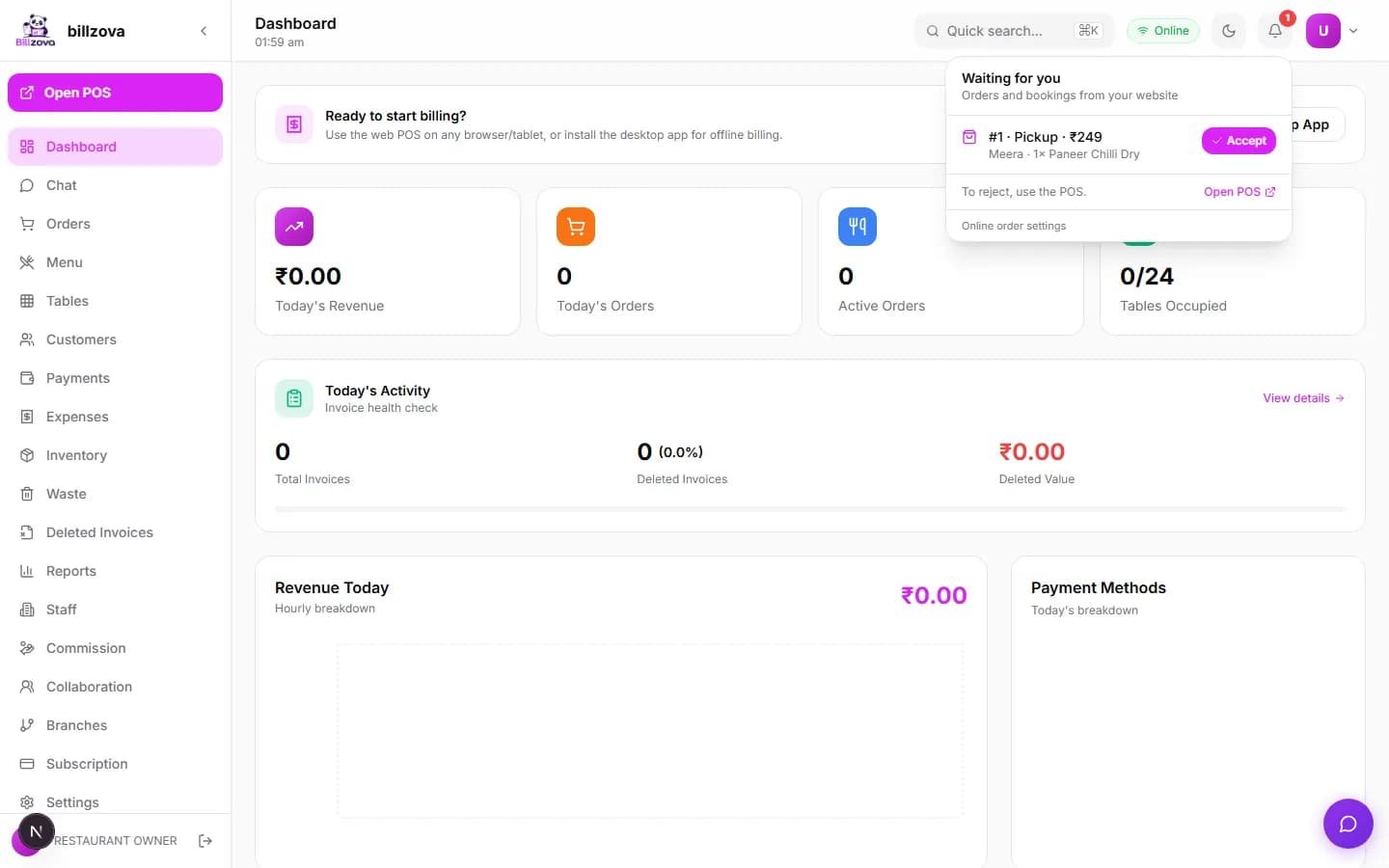
A direct-order link where no percentage is taken
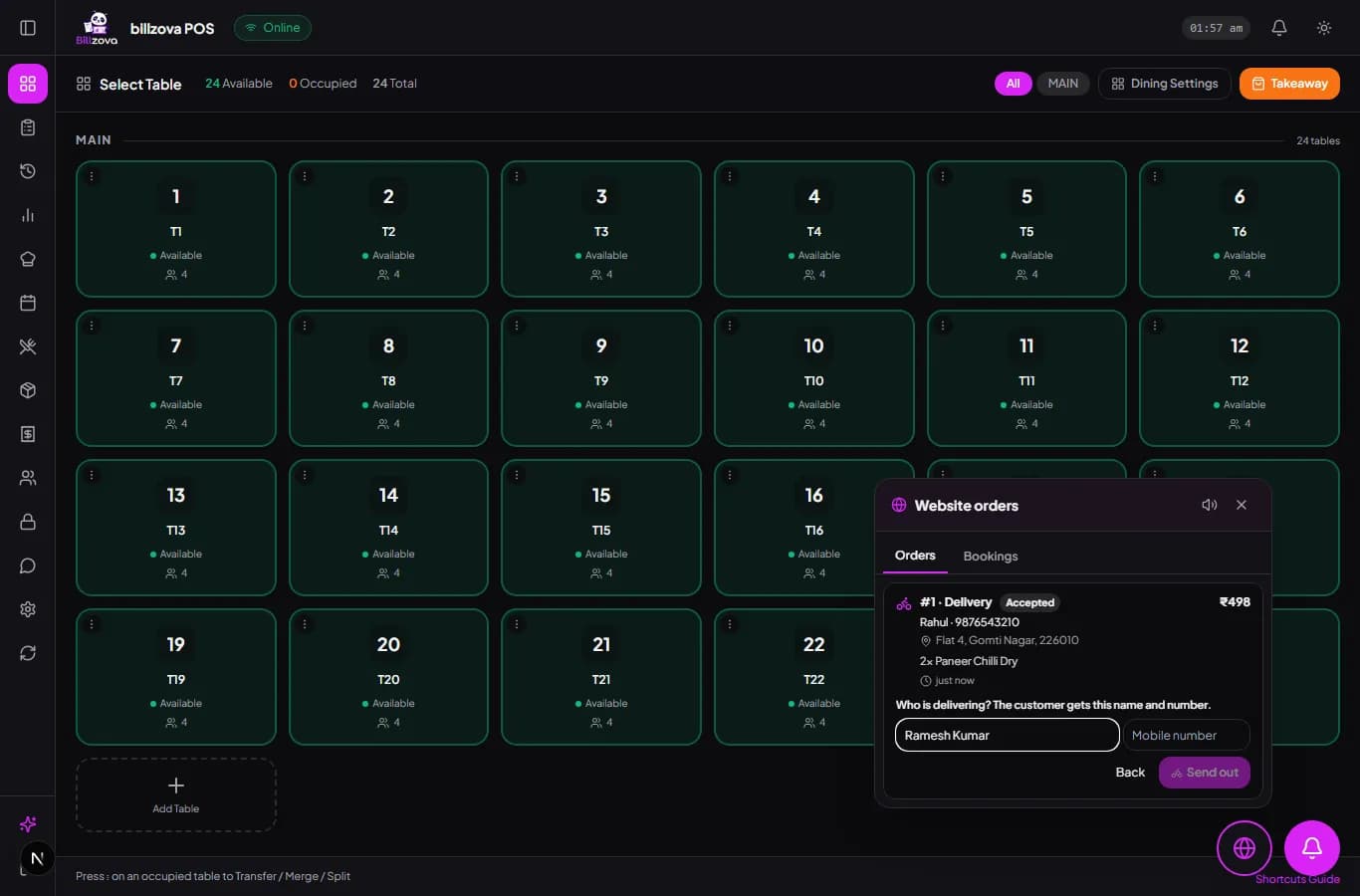
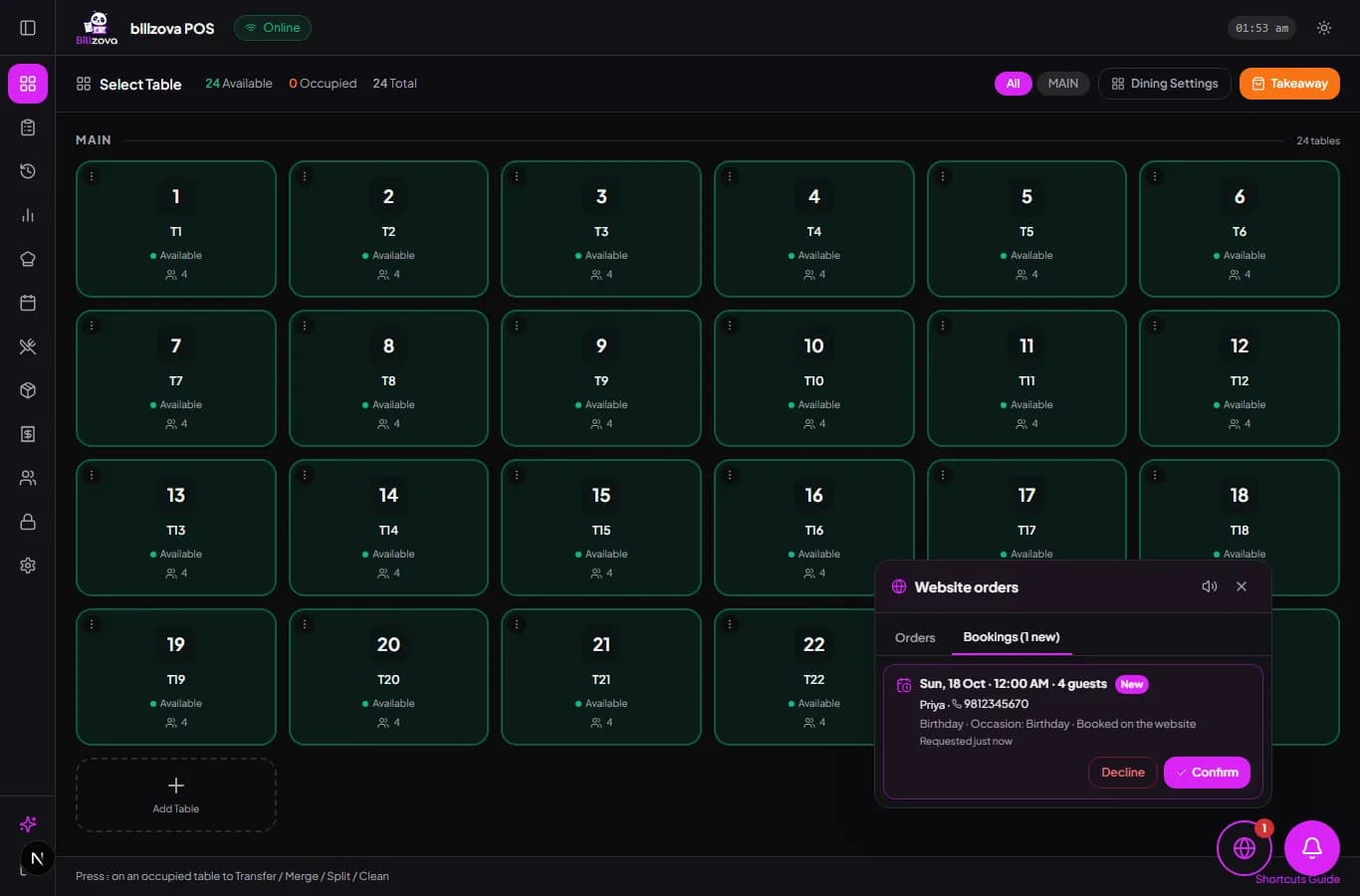
With a Billzova website, an order is just an order: the customer pays you, the bill goes into your POS, and the only costs are the ones you control — delivery, packaging and, if you choose online payment later, the gateway fee.
- 0% commission on every website order
- Customer name and number with each order
- Your prices and your offers
- Billed and reported like counter sales
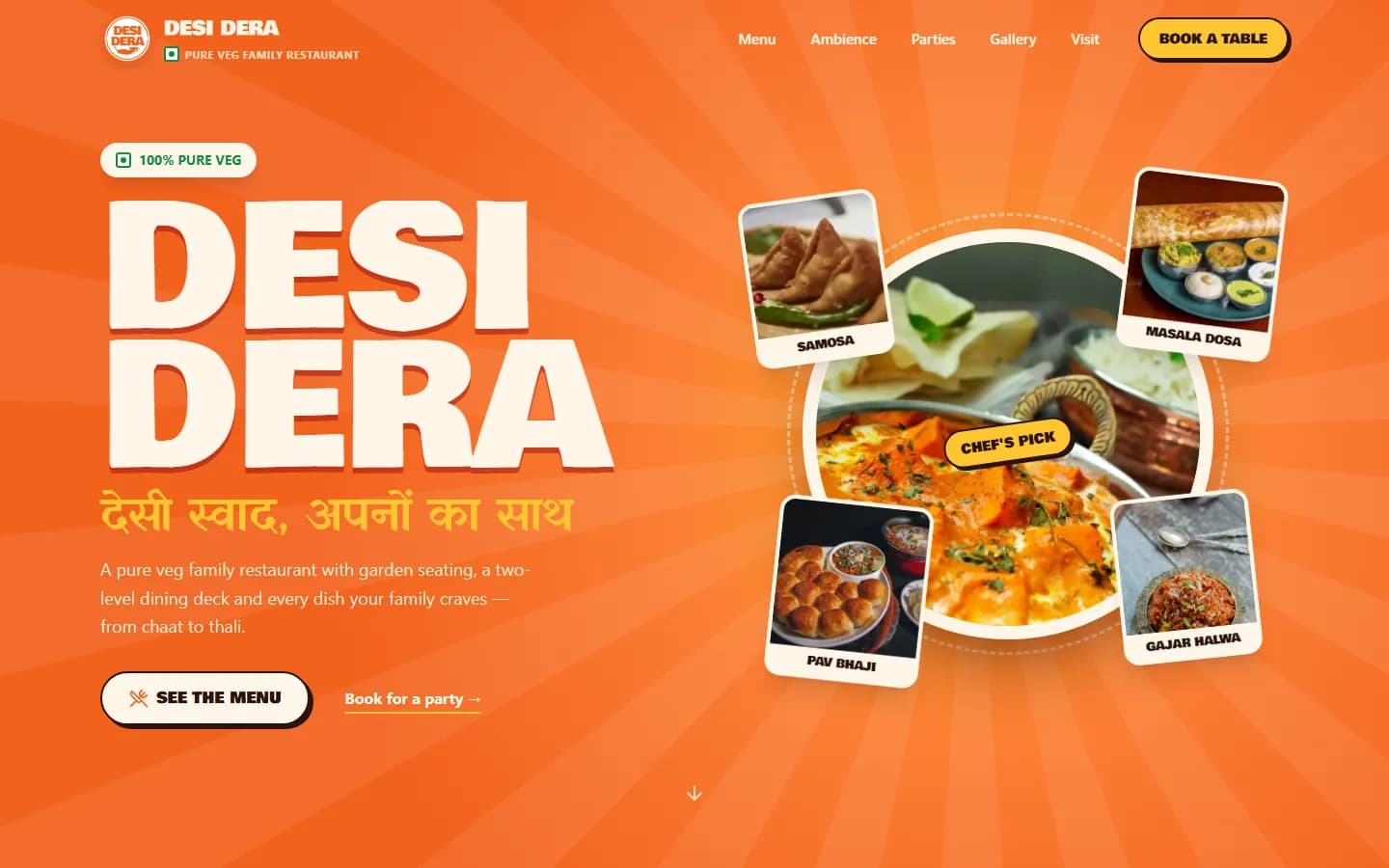
Delivery area, minimum order and pickup — set to what pays
Direct delivery only saves money if each trip is worth it. Limit delivery to the pincodes your rider can cover quickly, set a minimum order, and push pickup — which has no delivery cost at all — so your saving is not eaten by fuel and time.
- Delivery pincodes you choose
- Minimum order value
- Pickup-only or pickup + delivery
- Turn website orders off in rush hour
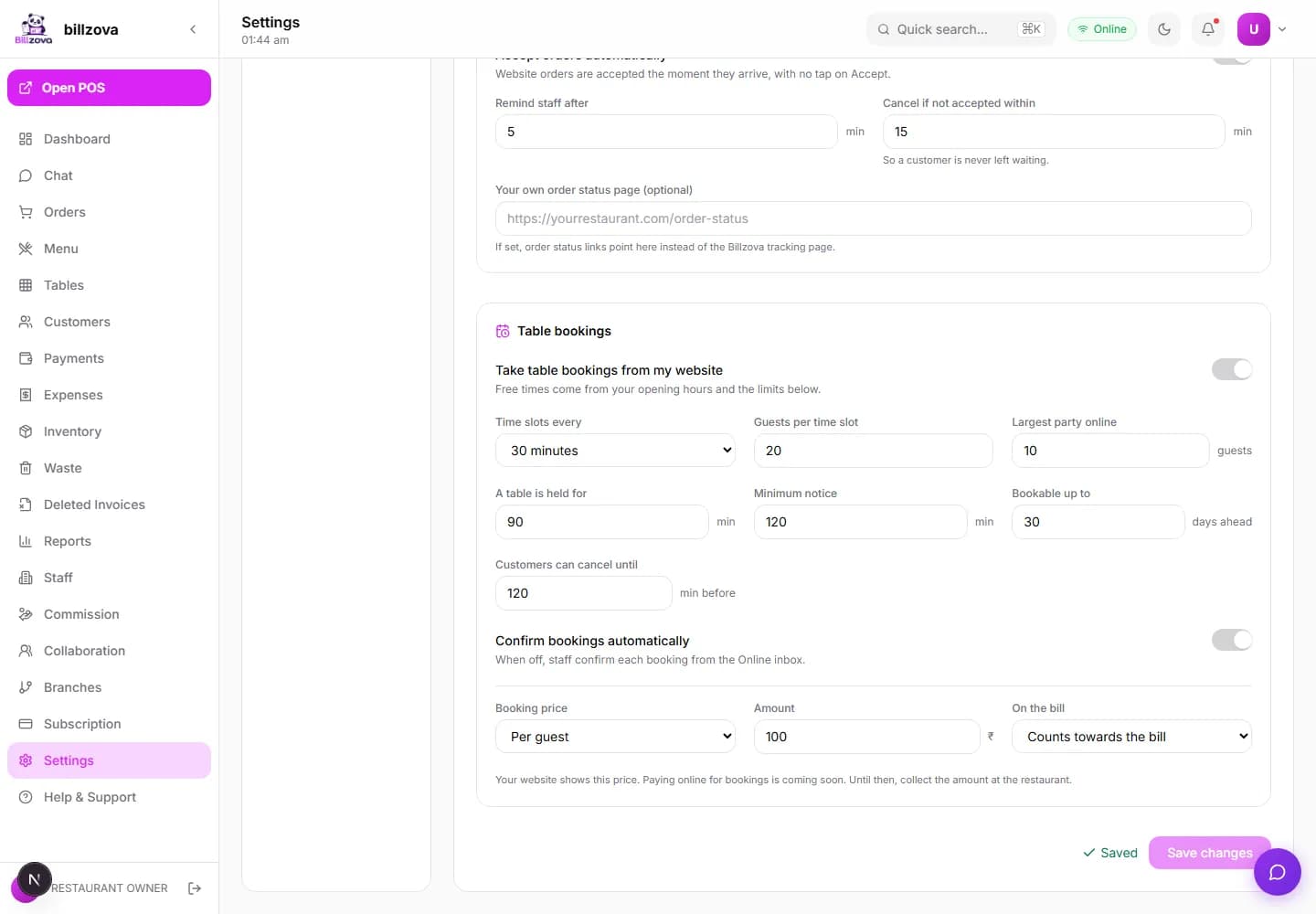
In the product
What a direct channel looks like with Billzova
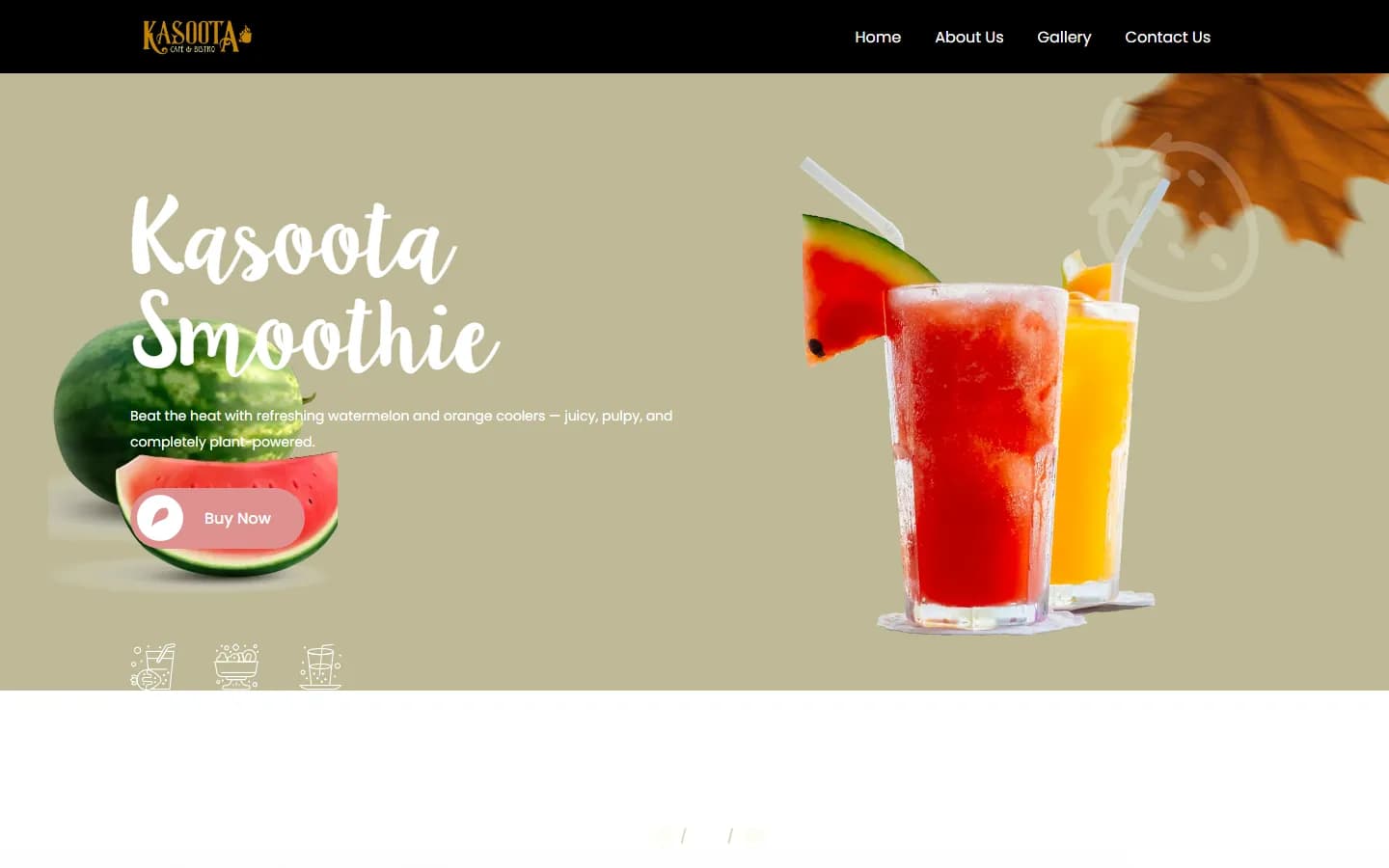
Your website, your POS, your customer — no middleman in between.
Compared
Where the money goes on a ₹450 delivery order
Through a delivery app at 22% commission
- ₹99 commission to the platform
- Promotions and ad spend on top, if you run them
- Customer contact usually stays with the app
- Payout on the platform's schedule
- Next order from the same customer: ₹99 again
Direct through your own website
- ₹0 commission
- Your own rider and packaging (your cost — say ₹30)
- No gateway fee for cash on delivery or pay at counter
- Customer name and number in your POS
- Next order from the same customer: ₹0 commission again
FAQ
Zero-commission ordering — questions owners ask
What commission do Zomato and Swiggy charge restaurants?▾
Is zero-commission ordering really free?▾
Do I pay payment gateway charges on direct orders?▾
Are UPI payments to restaurants free?▾
Should I stop listing on Zomato and Swiggy?▾
How many customers will actually order from my website?▾
How do I deliver if I leave the apps for some orders?▾
Can I offer a discount on direct orders?▾
What about ONDC and new zero-commission delivery apps?▾
How does Billzova help with zero-commission ordering?▾
How long until a website pays for itself?▾
What if my extra delivery cost is higher than the commission?▾
Keep the commission on your own customers.
A Billzova website sends every order straight into your POS — no percentage taken, ever. Websites from ₹9,990, GST included — lower during our website offers.