Restaurant No-Shows: How to Reduce Them With a Better Reservation System
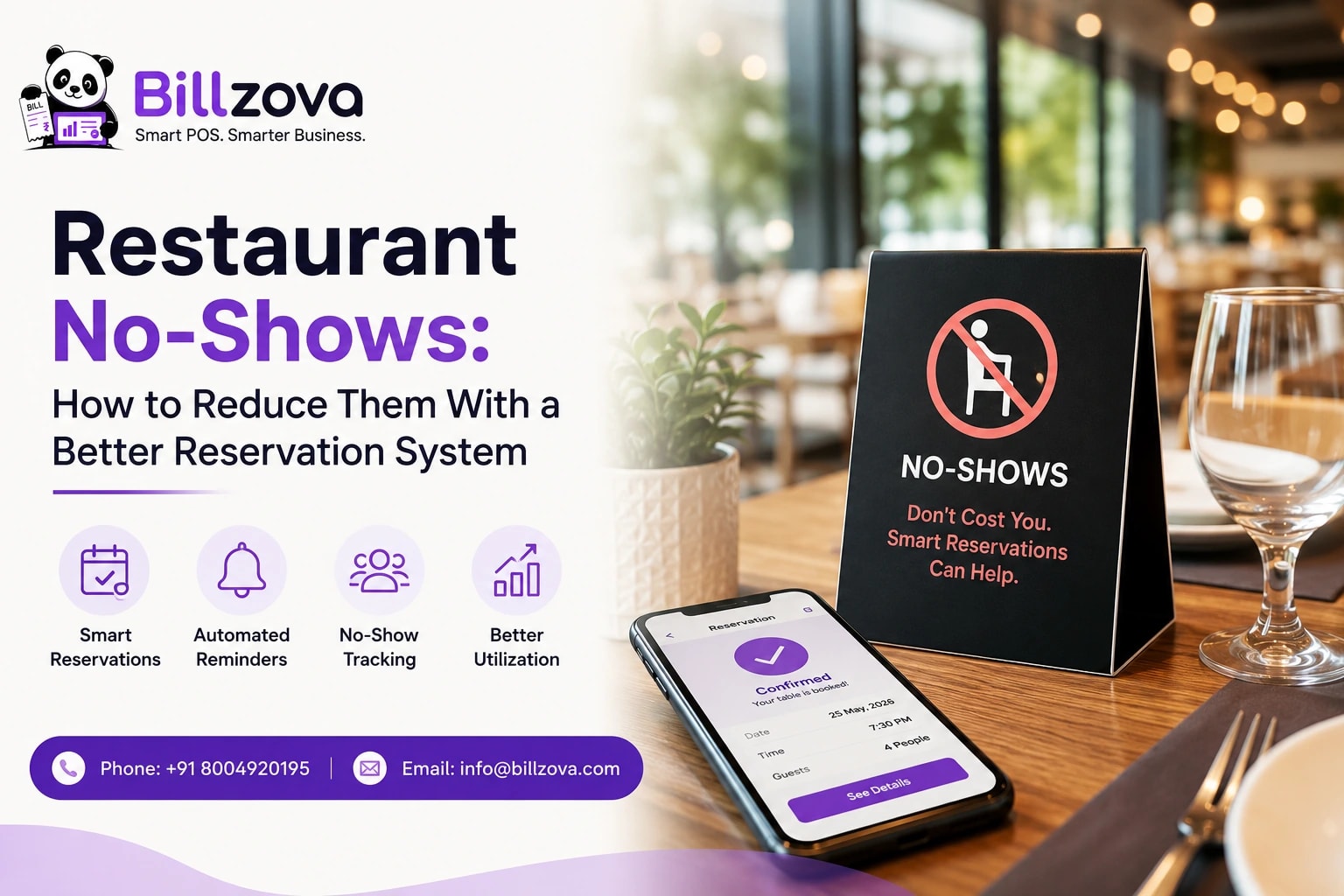
7:45pm, a Saturday. Table six has been held for a party of four since a phone call three days ago. 8:00pm comes and goes. 8:15pm, still nothing — no call, no message. By 8:30pm, you've made the call: release the table, seat the walk-ins who've been waiting at the door. The party of four never shows up at all, or wanders in an hour later as if nothing happened.
Every restaurant that takes reservations has lived some version of this night. What's less common is actually tracking how often it happens, what it costs, and whether it's getting better or worse over time — because a no-show, unlike almost everything else in a restaurant, leaves no natural record behind. Nobody paid, nobody ordered, nothing was billed. Without deliberately marking it, a no-show simply evaporates from the data, remembered only as a vague, cumulative frustration rather than a specific, trackable pattern.
Woody Allen
Filmmaker
For a restaurant relying on reservations, that line cuts both ways. Eighty percent of a reservation's value to you is the guest actually showing up — and the twenty percent that doesn't is exactly the gap this guide is about closing, or at least understanding well enough to plan around.
Why No-Shows Cost More Than the Empty Seat
The obvious cost of a no-show is the revenue that table would have generated. The less obvious, often larger cost is what else that table couldn't do during the window it was held. A table reserved for 8:00pm is effectively unavailable from whenever you stop offering it to walk-ins — often 30 to 60 minutes before the actual booking — through whenever you finally give up and release it. That's a real window of lost walk-in revenue, on top of the no-show's own lost revenue, stacked together.
There's a third, quieter cost too: kitchen and staff preparation. A large party's reservation often means the kitchen has a rough sense of expected volume, staff have been told to expect a table, and in some cases specific prep has started ahead of the booking. None of that is wasted dramatically, but it's a real, if small, inefficiency that compounds across a night with several no-shows rather than just one.
Why "Just Overbook a Little" Isn't a Real Strategy
Airlines overbook flights because they have decades of statistical data on no-show rates for specific routes and times, and the economics of a slightly overbooked flight are well understood at scale. A single restaurant guessing at an overbooking buffer based on gut feeling is a much riskier bet — guess wrong in one direction and you're turning away a party you had genuine room for; guess wrong in the other and you've double-booked a table with two parties who both showed up, which is a worse guest experience than either could have had separately.
Overbooking as a deliberate, data-informed strategy can work for restaurants with a real, measured no-show rate for specific time slots and party sizes. Overbooking as an informal habit — "we always get a couple no-shows on Saturday, so just take a few extra bookings" — is closer to guessing, and guessing is exactly what good no-show data is supposed to replace.
What a Reservation System Needs to Actually Reduce No-Shows
Reducing no-shows isn't really about the reservation system itself — it's about what the system makes possible around the reservation. Four specific capabilities do most of the real work.
Checklist
- A real status for each booking — not just "exists" or "doesn't exist," but confirmed, seated, no-show, or cancelled, tracked distinctly
- A way to actually contact the guest ahead of time, using a phone number captured at booking, not reconstructed later
- A warning when a new booking would overlap an existing one on the same table, so double-booking is a deliberate choice, not an accident
- Enough historical data, over time, to actually see which days, times, or party sizes have the highest no-show rates
None of these individually prevents a no-show from happening. Together, they turn "we get a lot of no-shows" from a vague impression into something you can actually see, act on, and measure improvement against.
Tracking No-Shows as Data, Not Just Memory
The single most overlooked step in reducing no-shows is the simplest one: actually marking a booking as a no-show when it happens, rather than just quietly clearing the table and moving on. It takes seconds, and it's the only reason any of the patterns in this guide become visible at all later.
| Status | What It Means |
|---|---|
| Confirmed | The booking is active and expected |
| Seated | The guest arrived — the linked table automatically shows as occupied |
| No-Show | The guest never arrived, and the booking is explicitly marked as such |
| Cancelled | The guest actively cancelled ahead of time — a meaningfully different, more considerate outcome than a silent no-show |
That last distinction — cancelled versus no-show — matters more than it might seem. A guest who calls to cancel, even at the last minute, is behaving completely differently from one who simply never shows up and never says anything. Lumping both into one undifferentiated "didn't come" bucket erases exactly the distinction that would tell you whether your no-show problem is really a no-show problem, or actually more of a policy problem around handling legitimate cancellations gracefully.
The Double-Booking Warning: A Safety Net, Not a Block
A well-built reservation system should warn staff when a new booking's time overlaps an existing one on the same table — but as a warning to consider, not a rule that blocks the booking outright. There are entirely legitimate reasons to book over an existing reservation deliberately: planning for an expected no-show based on that guest's own history, or simply choosing to take the risk on a busy night when demand outstrips your genuinely available tables.
Info
A Month of Bookings, Tracked vs Untracked
The difference between tracking no-shows and not tracking them is easiest to see side by side over a real month.
Without tracking: The restaurant took roughly 200 reservations in a month. Some clearly didn't show up — staff remember a frustrating Saturday, a couple of bad Friday nights — but there's no actual count, no breakdown by day or time, and no way to know if this month was better or worse than last month. The owner's honest answer to "what's our no-show rate" is a shrug and a guess.
With tracking: The same 200 reservations, but every outcome — seated, no-show, cancelled — is marked as it happens. At month's end, the breakdown is immediate and specific.
17%
Going a layer deeper into that same illustrative data: of the 34 no-shows, 21 were concentrated in Friday and Saturday evening slots between 8 and 9pm — nearly two-thirds of the total, in a fraction of the week's total booking slots. That's not a diffuse, restaurant-wide problem requiring a blanket policy change. It's a specific, narrow pattern pointing toward a specific fix — a firmer confirmation process, or a deposit policy, targeted at exactly those slots, rather than applied indiscriminately across every booking all week.
Confirming Reservations Without Being Annoying
A confirmation contact ahead of the booking is one of the most effective, lowest-effort ways to reduce genuine no-shows — a guest who's been reminded is measurably more likely to either show up or actively cancel, rather than simply forgetting and defaulting to a no-show. The trick is doing it without feeling like a nag.
A single, well-timed message — same-day or the evening before, not multiple reminders stacked on top of each other — captures most of the benefit. This is exactly where having a real phone number on the booking, captured once at the time of reservation, matters: a WhatsApp message confirming the time and party size is a low-friction way to both remind the guest and give them an easy, no-awkwardness way to cancel if their plans have changed, which is a genuinely better outcome for you than a silent no-show either way.
Tying a Reservation to a Real Table vs Just a Time Slot
A booking that's just a note — "table for four, 8pm, Sharma" — with no link to an actual physical table creates its own quiet source of confusion on a busy night: which table, specifically, is being held? A reservation tied to a real, specific table removes that ambiguity, and it's also what makes automatic status tracking possible at all — when a guest is seated, the system can flip that exact table's status automatically, rather than staff needing to remember to update two separate things by hand.
That said, rigid table-assignment isn't always practical days in advance — sometimes the right move is noting a general table number or section at booking time and finalizing the exact table closer to the actual day, once you can see the real floor situation. A good system supports both: strict table-linking when you want it, and flexible section-level booking when exact assignment doesn't make sense yet.
What to Do When a No-Show Actually Happens
The immediate handling matters almost as much as the tracking. The two things worth doing in the moment: release the table for walk-ins as soon as you're genuinely confident the guest isn't coming (not necessarily the exact booked time — a reasonable grace window first), and mark the booking's status honestly, right away, rather than deferring it to "clean up later," which in practice usually means it never gets cleaned up at all.
What's generally not worth doing in the moment: an accusatory follow-up message to the guest. A no-show is frustrating, but the goal of tracking it is understanding your own pattern over time, not relitigating any single instance with the guest who missed it — that conversation, if it happens at all, is better had thoughtfully later, not fired off in frustration the same night.
Using No-Show Data to Actually Improve
Once no-shows are being tracked consistently, real patterns tend to surface within a few weeks — not month one, since that's often too small a sample, but by the second or third month of consistent tracking. Common patterns worth specifically looking for: certain days of the week with a meaningfully higher no-show rate than others, particular time slots (late-evening bookings often run higher than early ones), and larger party sizes, which sometimes no-show at a different rate than smaller ones since group plans are more prone to falling apart at the last minute.
Each specific pattern points toward a specific, proportionate response — a slightly firmer confirmation process for the particular slots or party sizes that run high, rather than a blanket policy applied everywhere regardless of whether that specific slot actually has a problem.
Should You Ever Charge for a No-Show?
Deposit or cancellation-fee policies for reservations are a real, legitimate tool — common for large parties or peak-demand slots at plenty of restaurants — but they're also a genuine trade-off worth thinking through rather than adopting reflexively. A deposit requirement reduces no-shows among the guests willing to book at all, but it also filters out some guests who would have shown up fine and simply didn't want to commit money upfront for a casual dinner reservation.
A reasonable middle ground many restaurants land on: no deposit for typical small-party bookings, but a deposit or credit-card hold specifically for large parties or high-demand time slots, where the cost of a no-show is largest and the guest is already making a more significant commitment by booking at all. Whatever you choose, having real no-show data first — which slots and party sizes actually have a problem — makes the decision a targeted one instead of a blanket policy guessed at from instinct.
Signs Your Restaurant Has a No-Show Problem You Haven't Noticed
Because no-shows leave no natural trace, plenty of restaurants have a real, costly pattern running for months without ever quite naming it. A few signs worth checking for specifically:
Best Practice
- Staff regularly mention "we held that table for nothing" without anyone tracking how often it actually happens
- Certain nights consistently feel like they underperformed relative to how "full" the booking sheet looked
- Walk-ins get turned away for tables that later sit empty at the actual booking time
- You've never once looked at a specific number for how many bookings didn't show up last month
- Reservations are tracked in a diary or spreadsheet with no consistent way to mark an outcome after the fact
If more than one or two of these sound familiar, there's a reasonable chance the real no-show rate is higher than the vague, gut-feeling impression suggests — impressions tend to average out and fade, while the actual lost-revenue pattern keeps happening at the same rate underneath.
Frequently Asked Questions
What's a "normal" no-show rate for a restaurant?
It varies meaningfully by restaurant type, location, and booking channel, so there's no single universal benchmark worth chasing. The more useful exercise is establishing your own restaurant's actual rate first, then working to reduce it against your own baseline.
Does a confirmation message actually reduce no-shows, or just annoy guests?
A single, well-timed confirmation — not repeated reminders — tends to help more than it annoys, since it gives a guest whose plans changed an easy, low-friction way to cancel instead of simply not showing up. The annoyance risk comes mainly from over-messaging, not from the practice itself.
Should I release a table immediately if a guest is a few minutes late?
Most restaurants build in a reasonable grace window before treating a late arrival as a no-show — the right length depends on your own typical wait patterns and how busy that specific night is, but an immediate release the moment the clock hits the booked time tends to create more false no-shows than it prevents real losses.
Is it worth tracking no-shows if my restaurant only takes a handful of reservations a week?
Yes, though the patterns will take longer to become statistically meaningful with a smaller volume. Even a rough sense of which specific bookings tend to fall through is more useful than no tracking at all, and the habit costs almost nothing to maintain regardless of volume.
Can walk-in customers be tracked the same way as reservations?
Walk-ins aren't reservations in the first place, so there's no "no-show" concept that applies to them — they either arrive and get seated or they don't, with no prior commitment to track against. This guide's tracking specifically applies to bookings made in advance.
Does linking a reservation to a real customer record help with no-shows?
It can, over time — a customer history that shows a pattern of repeat no-shows is useful context the next time that same guest books, the same way our restaurant CRM guide covers using customer history more broadly to inform how you treat repeat guests.
What's the difference between a cancelled reservation and a no-show, practically?
A cancellation means the guest actively told you their plans changed, usually with enough notice to do something useful with the table. A no-show means no notice at all, and the table sat unavailable to anyone else during exactly the window it could have generated other revenue. Tracking them as genuinely separate outcomes, not one undifferentiated "didn't come" category, is what makes the rest of this guide's advice actionable.
How soon after a missed booking should I mark it as a no-show?
As close to the moment you're confident the guest isn't coming as possible — deferring it "until later" is exactly how tracking quietly stops happening at all, since the specific details are easiest to get right immediately and easiest to forget entirely by the next day.
Can I see no-show patterns by specific staff member who took the booking?
That's a less common cut of the data than day, time, or party size, and it's worth being cautious about over-interpreting it — a no-show is almost always about the guest's own plans falling through, not something the staff member who took the booking could have controlled.
Does a bigger party size always mean a higher no-show risk?
Not necessarily as a universal rule — it's exactly the kind of assumption worth checking against your own actual data rather than accepting as given, since the real pattern varies by restaurant and clientele.
Should online or phone bookings be treated differently for no-show tracking?
The tracking itself should stay consistent regardless of how the booking came in — but it's worth keeping the booking channel visible in your data, since a genuine difference in no-show rates between phone and online bookings is a useful, checkable pattern in its own right.
The Bottom Line
No-shows will never fully disappear — some percentage of any restaurant's bookings will always fall through, no matter how good the reservation process is. The realistic goal isn't zero; it's turning a vague, frustrating pattern into a specific, measured one you can actually act on — which slots, which party sizes, whether a confirmation message is actually moving the number, whether a deposit policy for large parties would genuinely help.
billzova's reservation system tracks the full status flow — confirmed, seated, no-show, cancelled — tied to real tables, with a double-booking warning that flags conflicts without blocking a deliberate call, included standard at ₹399/month. If no-shows are currently a feeling rather than a number at your restaurant, that's the first thing worth fixing.
Billzova Team
Restaurant POS & Billing Experts
We build Billzova — GST billing, KOT, offline mode, inventory and reports for Indian restaurants. This team writes from what we see helping real restaurants bill faster every day.
Run your restaurant on billzova
GST billing, KOT, offline mode, inventory & reports in one app. ₹399/month — first month free.