Restaurant Food Waste: What It Really Costs and How to Reduce It
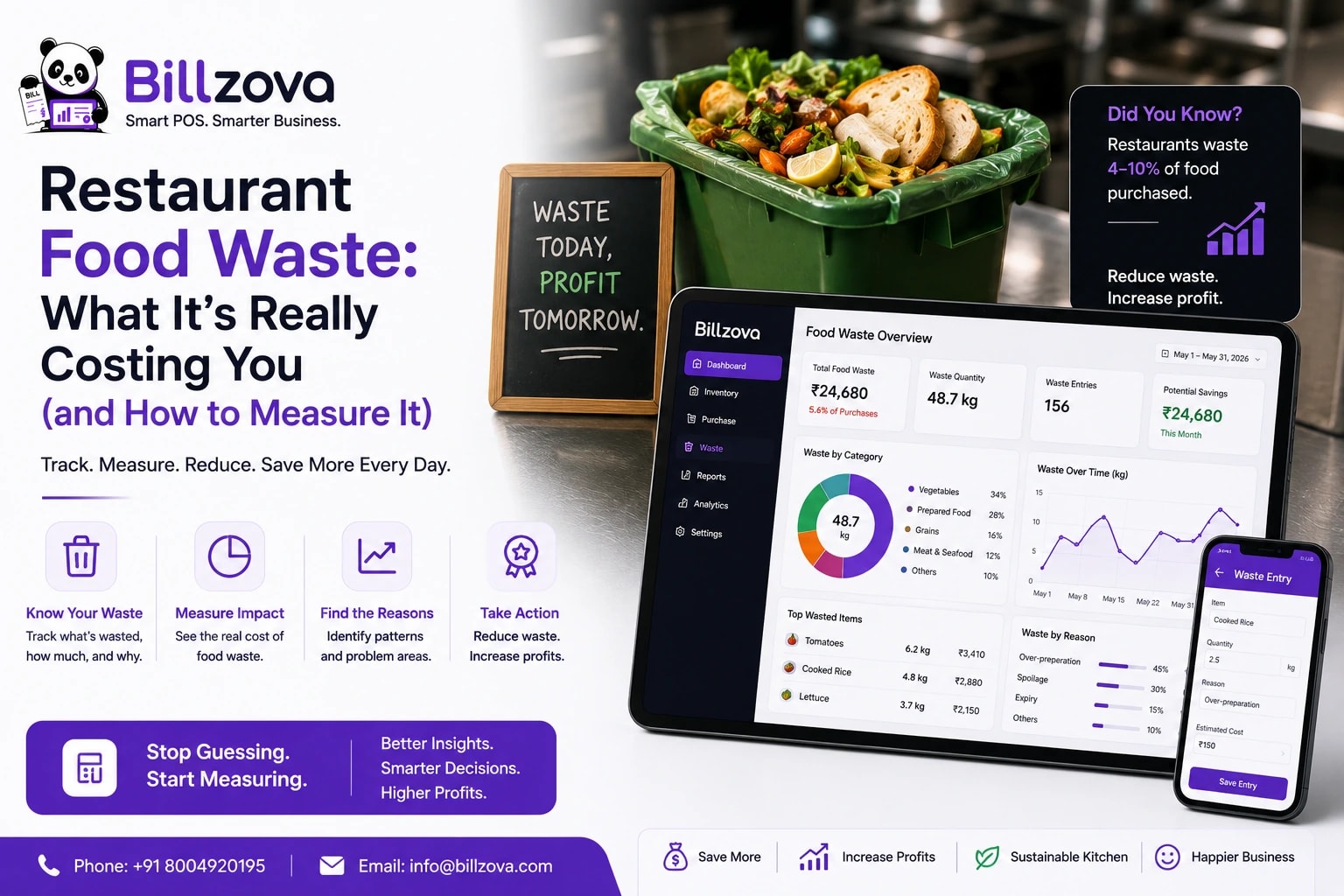
Ask most restaurant owners how much food waste is costing them, and you'll get a shrug and a guess — "maybe 5%, maybe more", usually followed by "it's hard to say." That answer isn't a personal failing. It's what happens when you try to manage something that never gets written down. A plate scraped into the bin, a tray of prep gone bad in the fridge, a dish sent back and remade — none of it shows up on an invoice, so none of it shows up in any report an owner normally looks at.
This guide does two things in order. First, it shows you how to measure what waste is really costing you, in rupees, broken down by why it happened and where in service it happened. Then it covers the practical ways to reduce it — purchasing, storage, prep, portioning and menu design — so you can see which fixes actually work.
For a sense of scale: the UN Environment Programme's Food Waste Index Report 2024 estimates that food service accounted for about 28% of the food wasted worldwide at the retail, food service and household level in 2022. Restaurants are a real part of the problem — and every kilo saved is money back in your margin.
Why "We Probably Waste a Lot" Isn't a Number You Can Act On
A vague sense that waste is "too high" doesn't tell you what to do. Too high compared to what? Concentrated where? Costing how much? Without those answers, an owner has two bad options: do nothing because the problem feels fuzzy, or make a sweeping change — cut portions across the whole menu, squeeze every purchase order — that may fix a problem that was never where you thought it was.
Real measurement replaces both with something specific. Instead of "we waste too much", you get something like: "Prep error is our biggest waste cost, almost all of it in the evening prep shift, mostly on one dish." That's a claim you can act on — and, a few weeks later, check whether your fix worked.
A Wasted Ingredient vs a Wasted Dish: Costed Differently
A wasted raw ingredient — a kilo of tomatoes that spoiled, a bag of rice damaged in storage — is simple: quantity wasted × what that ingredient costs you per unit.
A wasted finished dish — sent back, dropped, made wrong — is costed at what it cost you to make, not at its menu price: every ingredient in the recipe, at your real ingredient costs, added up. This is the number most owners skip when estimating waste by hand, because doing it accurately even for one dish means tracing back through the full recipe.
| Wasted Raw Ingredient | Wasted Finished Dish | |
|---|---|---|
| How it's costed | Quantity × cost per unit | Sum of its recipe's real ingredient costs |
| Effect on stock | Deducted from inventory when logged | Already deducted when the dish was made — not deducted again |
| Typical cause | Spoilage, storage damage, supplier rejection | Prep/cooking error, customer return, overproduction |
| Easy to estimate by hand? | Reasonably, for a single item | Difficult — needs full recipe cost data |
Kitchens that only jot down wasted raw ingredients — because that's the easier number — systematically miss every dish that was fully cooked before being thrown away, which is often the more expensive kind of waste.
The 12 Reasons Behind Restaurant Food Waste
"Reduce waste" only becomes actionable once you know which reason is driving the cost. Lumping every loss into one bucket hides exactly the information you need.
| Reason | What It Looks Like |
|---|---|
| Expired | Passed its shelf life before it could be used |
| Spoiled | Went bad before expiry — a temperature or handling issue |
| Overproduction | More was prepared than was ordered or sold |
| Prep Error | An ingredient was prepped wrongly and became unusable |
| Cooking Error | A dish came out wrong and had to be discarded |
| Customer Return | Sent back by a customer after being served |
| Dropped | Physically dropped or damaged during handling |
| Supplier Reject | Rejected on arrival for quality before it entered stock |
| Damaged in Storage | Damaged while stored — packaging, pests or similar |
| Unaccounted | Found missing during a stock count, no clear cause |
| Staff Meal | Given to staff — worth tracking honestly, not hiding |
| Other | A known reason that doesn't fit any of the above |
High overproduction is a forecasting or batch-size problem. High prep error is a training or process problem. High supplier rejects is a sourcing problem, not a kitchen one at all. Each reason points to a different fix — which is why one undifferentiated "waste" total is almost useless for deciding what to do next.
Tip
Where in Service Waste Happens
| Stage | What Happens Here |
|---|---|
| Storage | Before anything is touched — fridge, freezer or dry store |
| Preparation | While ingredients are being prepped ahead of cooking |
| Cooking | During cooking — a burnt or spoiled batch |
| Service | After a dish is ready, before or while it reaches the table |
| Post-Service | After service — a returned or uneaten dish |
Crossing reason with stage is where the real insight shows up. "Spoiled, in storage" points to purchase quantities or stock rotation. "Cooking error, during cooking" points to training at the stove. Same kind of loss, completely different fix.
How to Calculate What Waste Is Costing You
Best Practice
- Log every waste event as it happens — item, quantity, reason and stage — instead of reconstructing it later from memory
- Cost each raw-ingredient entry at quantity wasted × your actual cost per unit
- Cost each finished-dish entry using that dish's real recipe cost, not its menu price
- Total every entry over a fixed period — a week is usually the shortest useful window
- Break the total down by reason and by stage before drawing conclusions
- Compare the period's total against your total food purchases for the same period, as a percentage
That last step matters because it makes weeks comparable. ₹8,000 of waste in a slow week is a much bigger problem than ₹8,000 in your busiest week of the year, even though the rupee figure looks identical.
Common Mistakes When Measuring Waste by Hand
Only counting what's easy to notice. A dropped plate gets written down because everyone saw it. A slow overproduction pattern — a little too much dal makhani prepped every single day — never gets logged, because no single day looks remarkable. Over a month it can cost more than all the dramatic losses put together.
Costing everything at menu price. It's natural to think "we lost ₹280" because that's what the dish sells for. The real loss is what it cost to make. Using the wrong number can make waste look far more or less expensive than it really is.
Losing the "why" in the moment. In the middle of a busy shift someone clears a spoiled tray and moves on. The reason was obvious at that moment, but it's rarely written down — and a number with no reason can't point to a fix.
Reviewing too rarely. A single end-of-month glance misses the week-to-week trend. By the time a month-end total looks alarming, whatever went wrong three weeks ago is forgotten.
A Worked Example: One Week of Waste, Priced Out (Illustrative)
These are illustrative figures for a mid-size full-service restaurant — not data from any real business — to show the kind of breakdown properly logged waste gives you.
| Reason | Example Cost for the Week | Share of Total Waste |
|---|---|---|
| Overproduction | ₹4,200 | 34% |
| Spoiled (storage) | ₹2,800 | 23% |
| Prep Error | ₹2,100 | 17% |
| Cooking Error | ₹1,300 | 10% |
| Customer Return | ₹900 | 7% |
| All other reasons combined | ₹1,100 | 9% |
| Total | ₹12,400 | 100% |
In this example, more than half the total (overproduction plus storage spoilage) comes from two specific, fixable causes: how much gets prepped ahead of demand, and how stock is stored and rotated. That's the whole value of a breakdown — one big discouraging number becomes a short, prioritised list of things to fix first. The next section covers how.
How to Reduce Food Waste, Stage by Stage
At purchasing
- Order from sales history, not habit. If a dish reliably sells a certain quantity on Saturdays, buy for that — your item-wise sales report tells you.
- Match quantity to shelf life. Ordering more of a perishable than you can realistically use before it spoils guarantees some loss, however well it's stored.
- Track supplier quality. If one supplier's deliveries keep getting rejected, that's a conversation (or a switch), not routine loss to absorb.
- Don't bulk-buy perishables just for a discount if your usage doesn't support it.
In storage
- First in, first out (FIFO). Older stock goes in front and gets used first; new deliveries go behind.
- Store each item correctly. Right temperature, covered, labelled with the date. Good storage is a food-safety requirement anyway: FSSAI's Hygiene Rating guidance document reminds food service businesses that they must follow the Good Hygiene Practices in Schedule 4 of the licensing regulations (Part V covers catering and food service).
- Do a quick daily fridge check before ordering, so you use what's about to expire first.
In prep
- Prep in batch sizes matched to realistic same-day use, not big batches "to save time later" that risk going unused.
- Standardise trimming and cutting across staff, especially for meat and vegetables, where technique changes how much is lost.
Through portion control
Portioning is one of the highest-leverage areas, because a small deviation repeats on every single order. A kitchen that consistently uses 10% more of a key ingredient than the recipe says isn't making one big mistake — it's making a small one, at scale, every day.
- Use scales, scoops and ladles of fixed sizes instead of eyeballing.
- Write recipes down with exact quantities and train against them.
- Spot-check portions now and then — drift happens slowly and unnoticed.
Through menu design
A menu where many dishes each need a unique, low-volume ingredient carries more waste risk than one built around ingredients shared across several popular dishes. Before adding a new dish, ask: does it bring in an ingredient nothing else uses? If so, that ingredient's entire purchase depends on one dish's sales. Our menu engineering and recipe costing guide covers this in more depth.
With your team
Kitchen staff usually see exactly where waste happens. Involve them in the weekly review, and don't blame individuals before checking whether the recipe or process itself is the cause. Also avoid over-correcting: cutting purchases too hard after a bad week just swaps waste for stock-outs and lost sales.
Setting a Realistic Waste Target
Once you have a real baseline, set a target as a percentage of food cost, calibrated to your own numbers rather than a figure borrowed from somewhere else. There's no single "correct" waste percentage — a buffet carries more overproduction risk than an à la carte menu, and a menu built on fresh, perishable ingredients will naturally run higher than one built on shelf-stable items. Start from your own baseline and tighten it gradually as you fix the causes your data points to.
Who Should Review Waste, and How Often
Best Practice
This doesn't have to be the owner every week — a manager reviewing weekly with the owner checking monthly is perfectly reasonable. What matters is that it's someone's clear, recurring job.
Connecting Waste Back to Your Menu and Stock
A dish with a high hidden waste rate — frequent prep errors, hard to forecast, short shelf life — is quietly more expensive to sell than its food cost percentage suggests, because that percentage usually only counts ingredients in dishes that were sold, not the ones made and thrown away.
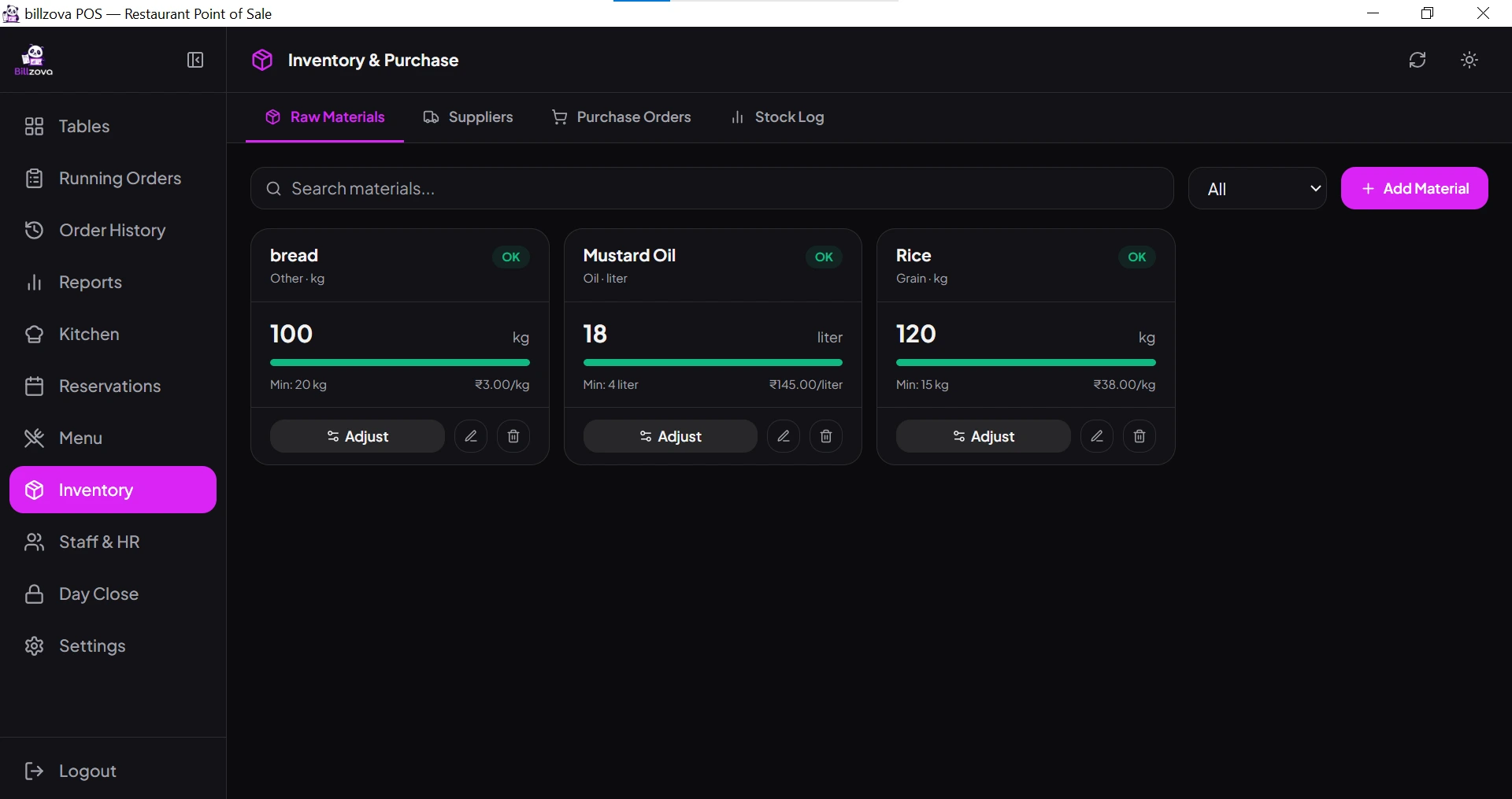
This is where waste tracking, recipe costing and inventory work together. With recipe-based stock deduction, you know what should be left in stock after each day's sales. Compare that against a physical count: the gap that isn't explained by logged waste is shrinkage — over-portioning, measurement error or, sometimes, pilferage. A dish that looks profitable on paper but keeps showing up in waste reports may need a simpler recipe, a portion change, or to come off the menu. See our restaurant inventory management guide and restaurant profit margin guide for the wider picture.
Frequently Asked Questions
What percentage of food cost is "normal" waste for a restaurant?
There's no single universal figure — it varies a lot by format, menu perishability and service style. Establish your own baseline first, then work to bring it down, rather than chasing a generic number.
What is the biggest cause of food waste in restaurants?
It varies by kitchen, but overproduction and inconsistent portioning are among the most common and costly, because both repeat across every order or batch. Logging waste by reason tells you which one it is for you.
Is it worth tracking waste if my restaurant is small?
Yes. A small restaurant with a tight margin has less room to absorb unmeasured waste than a big one, which makes visibility more valuable, not less.
How is a wasted dish costed if I don't have recipe costing set up?
Only roughly — by guessing its ingredient cost. Setting up basic recipe costing first is what makes accurate dish-level waste costing possible.
Should staff meals count as waste?
Track them as their own honest category — don't hide them and don't lump them in with genuine loss.
What's the difference between wastage and shrinkage?
Wastage is loss you can see and log — spoilage, prep errors, returns. Shrinkage is the unexplained gap between expected and actual stock that isn't covered by logged wastage, which can come from portioning, measurement errors or pilferage.
Should waste be measured against revenue or food cost?
Against total food cost (or purchases) for the period. Waste is a cost-side event; comparing it to revenue mixes in your pricing decisions.
Can waste tracking help catch theft?
Indirectly — a high "unaccounted" category is worth a closer look, since it's stock that disappeared with no explanation. For the billing side of loss prevention, see our guide on restaurant billing fraud warning signs.
Does logging waste slow the kitchen down?
It shouldn't — a waste entry should take seconds: item, quantity, reason, stage. If the process is slow, staff will quietly stop doing it accurately.
How often should I act on waste data?
When a reason-and-stage pattern shows up consistently over a few weeks, not after one unusual day. One bad week is often noise; a pattern that persists is a signal.
The Bottom Line
"We probably waste too much food" is a feeling. "Overproduction is our biggest waste category, concentrated in weekend dinner prep, costing roughly ₹4,000 a week" is a fact you can act on — and check a few weeks later. The difference is simply whether waste gets logged by reason and stage, and then whether you fix the top cause first: buying to sales history, rotating stock, prepping to demand and portioning to the recipe.
Billzova's waste tracking is built for exactly this: twelve reason codes, five service stages, recipe-based costing for finished dishes, an optional manager-approval threshold for large entries, a monthly waste target, and an on-demand AI summary of what's driving your cost. It sits alongside recipe-based stock deduction and purchase orders, all in the same plan — ₹399/month or ₹3,999/year including GST, with a 30-day free trial.
Billzova Team
Restaurant POS & Billing Experts
We build Billzova — GST billing, KOT, offline mode, inventory and reports for Indian restaurants. This team writes from what we see helping real restaurants bill faster every day.
Run your restaurant on billzova
GST billing, KOT, offline mode, inventory & reports in one app. ₹399/month — first month free.